Everything You Need To Know about Dog Reactivity
Everything You Need To Know about Dog Reactivity
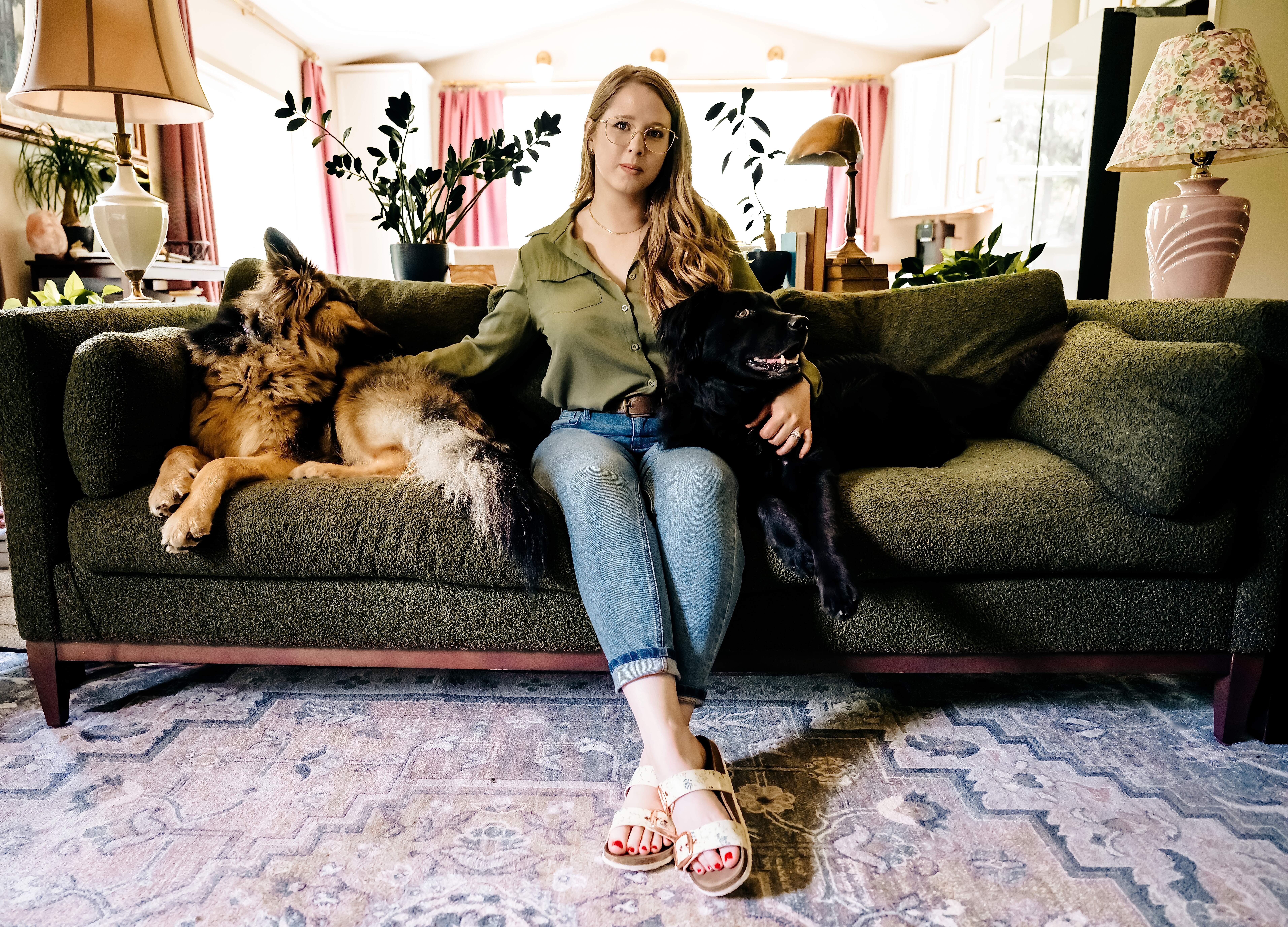
I have helped dozens of people with dog reactivity and have lived with two reactive dogs myself.
I have truly lived through what you are struggling with now and understand how you are feeling.
You feel lots of things.
Worried your dog is going to get away from you.
Worried a loose dog is going to run up to you and start a fight.
Embarrassed that your dog looks so viscous or is just so poorly behaved.
Confused about why your dog is doing this.
Unsure what to do to get them to stop.
Yep, It’s a lot to feel.
Well take a breath, because I am about to deep dive into everything to do with dog reactivity.
Let’s start with definitions.
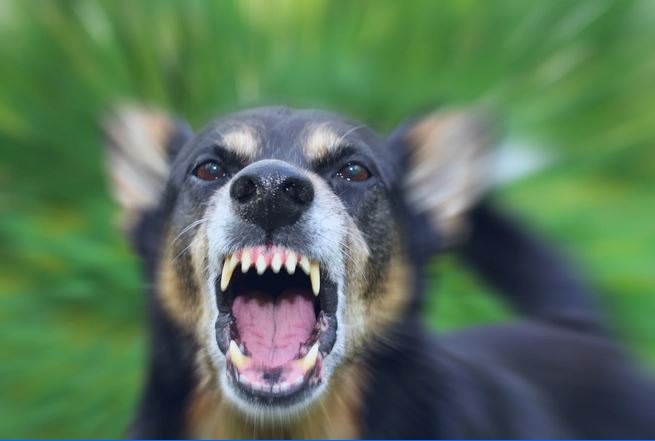
Reactive basically means that your dog throws a fit on leash when they see certain triggers.
That fit can be barking, growling, hackles up, lunging, running back and forth on the end of the leash… all the scary stuff.
Triggers generally for reactive dogs are other dogs or people. A trigger is just something that causes the reaction.
(Note: Hackles is the hair between your dog’s shoulder blades / hips and down their spine that stands on end when they are over aroused. This is a sign of excitement / startelement and is often associated with aggression, but is not on its own a good indicator of your dogs intentions)
To really begin,
Why is Your Dog Reacting?
It is SUPER important to understand your dog’s motivation for their behavior if you want to change it.
Generally, reactive dogs all look the same during their reaction so it can be difficult to discover why they are reacting by just looking at what they are doing.
Think about what you know about your dog and add that to their behavior to figure out their motivation for reacting.
#1.If your dog is throwing in play bowls and high pitched whining, they are probably over-aroused, wanting to play, and become frustrated by the leash that is preventing them from going to say hi. Sometimes they even take the leash in their mouth and bite on it.
(Note: Over-aroused just means extremely excited to the point where they aren’t really thinking. If you try to communicate with your dog, give commands, they won’t be able to obey because they are over-aroused. Their brain is flooded with adrenaline, they are overwhelmed by the environment / situation and have a hard time getting themselves out of this state)
#2.If your dog is standing tall with hackles up, barking/ growling deeply, they are probably trying to scare the other dog away.
#3.If your dog is backing away or hiding behind you, it is pretty clear that they are anxious / fearful about the possibility of an interaction and want to get out of there. If you keep progressing toward their trigger you are likely to get a reaction similar to dog #2 where they try to scare away the other dog because they are afraid that it will hurt them.
#4. We have what I think of as just big dumb doofy dogs who are in the habit of reacting / barking just because they can get away with it. These dogs aren’t really over aroused, they are just acting in a way we don’t like, and have never understood that we don’t like it. You could be unconsciously cuing or rewarding your dog for reacting, when they really don’t have to behave that way in their minds. There is no strong emotion driving their behavior.
Whew! That’s a lot so far. All that to say that basically you can have fear based reactivity, frustration based reactivity and the simpler, silly habit reactivity.
You get out of your pickle in a similar way, no matter your dog’s motivation. There are nuances that you apply to different situations though.
Let’s start with the easiest.
How to Overcome Your Dog’s Reactivity
Silly Habit Reactivity #4
In this case you “just” need to clearly show your dog that this is not a behavior you like, endorse, or want them to continue. If your dog doesn’t show signs of being anxious, fearful, or wanting to play with the other dog, he just barks because he thinks he should. Tug on the leash and say “no” or “Ah, Ah” and keep moving. Be firm, don’t even look at the other dog/person, no baby talk. No talk at all actually except for that in quotes.
Frustration Reactivity #1
If your dog loves other dogs and playing, you are likely in this category. Sometimes enrolling in daycare or setting up more playdates can help get them the socialization they crave and can decrease reactivity, but I wouldn’t count on that alone. Your dog sees other dogs, wants to go play, is prevented from going to go play (by the leash) and melts down like a toddler in the checkout aisle told they can’t have the candy bar.
The behavior stems from the emotion, so if we want to change it, we need to change the emotional state. You need to take your dog from frustrated to anything else. I turn seeing dogs into a game. If you can find the dog you can get a treat from me, then we continue about our business. Your dog will come to like this game, not feel frustrated, and you create the pattern of looking to you when they see a dog.
Fear Reactivity #2 & #3
If you have an anxious / fearful dog you probably know. Your dog isn’t outgoing, often backs away from new experiences, licks their nose and tucks their tail a lot. Maybe your dog is not overly anxious altogether, but they have a glaring scared spot. Maybe men freak them out or they had a bad experience with a big dog so now they are reactive when big dogs come by on leash. The fear can stem from a lack of socialization (most common) or from a specific traumatic event. Either way, you now have a dog that is afraid that strange people/dogs may hurt them so they try to scare them off before they get too close.
Like the frustrated dog, we need to change their emotional state in order to change their reaction. You need to go from scared to neutral or even to interested/happy to see their trigger. This takes longer to do than the other type of reactivity because convincing your dog not to be scared isn’t an easy or fast process. It looks pretty similar to the previous process though. You / your dog see a trigger, they get some AMAZING treats, then you move on. It is extra important that you use the best treat ever for this training since your dog has to be convinced that seeing the trigger is a good thing. We are taking something they see as very negative and are trying to turn it into a positive or neutral thing. You need a really strong positive to pull the needle over from negative to neutral. You also need many many repetitions to convince them that it is true/ you are right, seeing other dogs is a neutral thing.
Ok, now you understand the fundamentals you need to overcome reactivity from your dog’s perspective. But we aren’t done.
(BTW if you are feeling overwhelmed with all this information, I can teach you all of this in person, break it down and show you how it will work for your dog)
Next, we have to understand the mechanics of how to train this, and the reality of what it looks like, doesn’t look like, and how long it will take.
How to Train Your Dog to Not React
First, I don’t want your dog to react ever again.
I don’t want your dog to react ever again.
You can prevent your dog from reacting.
Here is the secret.
Your dog has a personal space bubble around them.
Things outside the bubble are fine, things on the edge of the bubble are cause for concern, things inside the bubble are so exciting/terrifying that their brain shuts down and they just purely react, no room for communication or education.
You need to keep your dog’s triggers out of their bubble.
Read that again.
Simple. (I didn’t say easy)
Figuring out how big your dog’s bubble is takes a little practice.
Dog trainers call this “finding your dog’s Threshold”.
That will be the next step for you.
Threshold is the distance from the trigger at which your dog first loses the ability to listen to you (follow commands)
Most of the time you are simply avoiding blow-ups, staying “under threshold” (keeping triggers out of the bubble) so you can build trust, work on basic leash skills and practice getting your dog to engage with you.
( if your dog isn’t good on leash without triggers present we need to start there)
Engage just means look at / listen to you.
When the situation is right, you will approach triggers to get them right on the edge of the bubble / at threshold. You will notice that your dog notices them and is a little upset / distracted by them.
This is when their mind is open enough to be trained.
To find the threshold, you will test engagement as you approach triggers.
“Testing engagement” means you give your dog a look command / say their name. They should at this point be trained well enough that without triggers present they look at you whenever you ask.
When your dog stops engaging, (if they don’t look back at you) you are over threshold. Move back a step (or wait for the other dog to walk forward a bit) then try again. When your dog listens to you again, you are at their threshold.
Their threshold isn’t the distance where a step over and they will blow up.
Now we can begin to actually train your dog to not react
At that magic distance you give a few treats to begin to change their association with what emotion they feel when their triggers are present, then after 5-30 seconds, you move away so the pressure and stress is taken away.
You can and should repeat this many times. I try to get 3-5 training moments out of each dog I identify as a good training opportunity by moving to threshold, then backing off for a minute, then going back to threshold.
Finding these opportunities isn’t easy!
If the other dog is walking toward you, it’s not going to work. In a confined area, like on city streets, it is difficult. If there are too many dogs in your neighborhood you might need to drive somewhere to walk so that you can actually keep dogs out of your bubble. Parks with sport fields are nice and give you the ability to go off the path and create distance where you need it.
(side note: I offer pack walks in Reynoldsburg, Ohio that are the perfect place to practice details can be found on my Facebook page)
Alright, that is why dogs react, and how to overcome reactivity
Again, if this doesn’t sound like something you can do on your own. Give me a call and I will help you through it.
To summarize:
Figure out why your dog is reacting. Silly habit, play frustration, fear.
Prevent reactions. Keep your distance from triggers
Discover your dog's bubble size / threshold distance
When the situation is right, bring your dog to their threshold and change their emotional association with food. Keep sessions short, then back off to let them recover/ destress
I hope this helps, but I know I couldn’t possibly have covered every specific question you have about what to do with your dog.
For starters, we didn’t discuss what tools you should / shouldn’t use,
We didn’t go over how to teach basic loose leash walking skills and engagement on walks,
We didn’t discuss the multiple little ways you can build confidence in your fearful dog,
We didn’t discuss the best treats to use…
I truly hope this article helps you,
And I know this is really hard to do on your own.
This is a very difficult topic to write about or to teach virtually / in videos.
You now have the theory which should help loads, but the practice is the most important part.
Do feel free to reach out with questions.
If you are in the Columbus, Ohio area, I would be happy to come to your home and show you how all this works.
Best of luck and all the patience!
-Rowan